Non-Itchy Wigs: Cap Features for Sensitive Scalps
23rd Oct 2026
Non-Itchy Wigs: Which Cap Features Matter Most for Sensitive Scalps?
Non-itchy wigs are not defined by one fiber or one premium cap. Comfort comes from matching the cap to what causes irritation: rough seams, trapped heat, pressure, movement, lace rubbing, or adhesive contact.
At The Wig Outlet, we recommend looking inside the wig before choosing by hairstyle alone. A smoother cap, better airflow, correct size, lighter weight, or comfort liner can matter more than extra features.
Where does the discomfort start?
- Forehead or temples: check lace, adhesive, and hairline placement.
- Crown or all over: check heat, seams, density, and cap pressure.
- Behind the ears or nape: check cap size, ear tabs, and adjusters.
- Only after several hours: check weight, sweat, and extra layers underneath.
First: Work Out What Is Making the Wig Itch
If you keep asking why wigs are itchy, the answer is often not “synthetic hair.” A seam can rub one spot, a tight circumference can create pressure, sweat can sit under a closed cap, or a loose wig can move enough to create friction.
An itchy wig does not always mean the wig is defective. Scalp dryness, hair products, adhesives, or an existing skin problem can feel worse once the scalp is covered. Location and timing matter before you buy another wig.
Soft Contact and Airflow Solve Different Problems
A soft cap and a breathable cap are not automatically the same thing. Hand-tied or lined areas can reduce rough contact, while open wefting can improve airflow. Choose according to the problem you feel.
If your main problem is... |
Start by looking for... |
|
Scratchy seams or tracks |
Hand-tied or smoother lined areas |
|
Heat and sweating |
Open-cap ventilation and lighter density |
|
Pressure |
Correct cap size and adjustable tabs |
|
Forehead irritation |
Soft lace, careful placement, minimal adhesive |
|
Wig movement and rubbing |
Secure fit or a soft wig grip |
|
Bare scalp sensitivity |
Smooth cap or breathable comfort liner |
There is no universal itch-free construction. Aim for fewer irritating contact points.
Hand-Tied Caps Can Reduce the Feel of Weft Rows
A 100% hand-tied cap secures fibers individually instead of relying on conventional machine-weft rows across the whole base. If you feel seams or tracks against a bare scalp, that smoother construction can be worth considering.
Our hand-tied wig collection includes DIANE by Jon Renau, which combines a hand-tied cap, monofilament top, velvet ear tabs and nape, adjustable tabs, and a lightweight short style. Those details work together. Hand-tied construction cannot fix the wrong size.
Open Caps Help With Heat, but Bare Scalps May Notice Wefts
If your question is Are wigs hot and itchy, ventilation deserves more attention. Open-cap construction leaves spaces between wefts so air can move through the base, which can help in warm Australian weather or during long wear.
Our SHEENA by Jon Renau uses O'solite open-cap construction and weighs about 54 grams. Some bare scalps may feel the wefts more directly, so a soft liner can help.
Monofilament Matters When the Top Feels Uncomfortable
Monofilament uses fine mesh at the part, crown, or larger top area. It is usually chosen for realistic parting, but it also changes scalp contact.
When comparing monofilament wigs, check how much area is actually monofilament. A mono part covers less than a full mono top, while a double monofilament adds another layer. SANDRA by Jon Renau combines double monofilament with a fully hand-tied cap.
A Lace Front Should Not Keep Rubbing Your Forehead
A lace front wig itchy forehead problem usually points to placement, lace contact, fit, or the product used to secure the front. Lace can still irritate if the edge sits incorrectly or moves repeatedly.
Our lace-front wigs use different constructions, so do not assume every lace front will feel identical. Some SmartLace styles are designed to contour without tape. If your skin reacts easily, avoiding unnecessary glue or tape removes another possible irritant.
Fit Can Matter More Than a Premium Cap Upgrade
A premium cap that is too small can still hurt. A cap that is too large can slide and rub. Before blaming the material, check circumference, ear tabs, and nape placement.
Adjustable tabs are for small refinements, not for forcing the wrong size to work. Compare our wigs by cap design and consider petite, average, or large options when the fit feels consistently wrong.
Weight and Density Often Show Up After a Few Hours
Some wigs feel fine for ten minutes and tiring after half a day. More hair can mean more weight, more heat, and greater pressure if the cap already fits snugly. For regular wear, compare non-itchy wigs by weight and density as well as appearance.
Our everyday wear wigs make it easier to compare these practical details instead of choosing only from a styled product photo.
A Comfort Liner or Wig Grip Can Help, but Keep It Simple
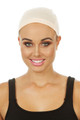
If you are wondering how to make a wig less itchy, the easiest fix may sit underneath it. Our Bamboo Wig Comfort Cap is soft, breathable, and moisture-wicking, creating a barrier between the scalp and wig interior.
If slipping causes rubbing, a soft wig grip can add hold without glue. Do not automatically stack several layers. More layers can add heat and pressure. Our wig grip vs. wig cap guide explains which layer solves which problem.
Synthetic Wigs Are Not Automatically the Cause
People searching for how to make a synthetic wig less itchy often focus on fiber when the cap is the real issue. Synthetic wigs can use open caps, hand-tied sections, monofilament, lace fronts, velvet edges, or basic wefted construction.
Human hair is not automatically more comfortable. Start with fit and interior construction, then choose the fiber that matches your styling and care routine.
Choose the Feature That Solves Your Actual Discomfort
At The Wig Outlet, we would not tell every sensitive-scalp shopper to buy the same cap. Heat may point you toward ventilation. Rough seams may make hand-tied construction more appealing. A bare scalp may benefit from a soft liner, while movement may call for better fit or a grip.
Start with the irritation, then choose the feature instead of trusting one itch-free label.
Frequently Asked Questions
Are Wigs Itchy for Everyone?
No. Whether wigs are itchy depends on fit, construction, scalp sensitivity, heat, friction, products, and wear time. Many people wear properly fitted wigs comfortably for long periods.
Why Is My Wig So Itchy Around the Hairline?
A tight front, rough lace edge, incorrect placement, adhesive, sweat, or movement can irritate the hairline. Check contact points before adding more hold.
How Can I Make Wigs Less Itchy During Long Wear?
To learn how to make wigs less itchy, reduce pressure, keep the scalp dry, use only necessary underlayers, and choose construction that addresses your specific irritation.
Are Non-Itchy Wigs Always Hand-Tied?
No. Hand-tied caps can reduce bulky seam contact, but an open-cap or well-fitted wig may suit someone whose main problem is heat rather than friction.
Why Does My Wig Feel Itchy After Wearing It for Hours?
If you wonder why does my wig feel itchy after wearing it, heat, sweat, weight, pressure, or rubbing may build gradually. Reassess fit, density, layers, and wear time.