
Wig Grips vs. Wig Caps: What Each One Actually Helps Do?
29th Apr 2026
Wig Grips vs. Wig Caps: What Each One Actually Does
We get this question all the time, and usually it comes after someone buys a wig, puts it on, and then realizes something still feels off. Maybe the wig looks good, but it shifts by lunchtime. Maybe it feels secure, but the base underneath is bulky and uncomfortable. Maybe you are trying to choose between a wig cap and a wig grip, and every answer online feels too broad to help.
Here is the simple version. A wig cap and a wig grip do different jobs. One helps with what is happening underneath the wig. The other helps keep the wig in place. Once you look at it that way, the choice gets a lot easier.
At The Wig Outlet, we usually tell people not to start with “what is best?” Start with “what is bothering me?” That is what leads you to the right layer, not more accessories you do not need.
Wig Cap vs. Wig Grip: The Quick Answer Most Shoppers Actually Need
If you want the fast answer to wig grip vs. wig cap, here it is:
- A wig cap helps flatten your own hair, smooth the base, and keep everything tidier under the wig.
- A wig grip helps hold the wig in place and cuts down on slipping.
So if your main problem is messy hair underneath, start with wig caps.
If your main problem is movement, sliding, or wanting a more secure fit without glue, start with wig grips.
That is the real difference. A cap helps the base. A grip helps the hold.
What a Wig Cap Actually Does Under the Wig
A lot of people buy a wig and do not think much about what sits underneath it. Then they wonder why the style feels bulky, the crown looks uneven, or the wig does not sit as neatly as they expected.
That is where a wig cap helps.
A good women's wig cap can:
- Keep your natural hair tucked in
- Make the base look smoother
- Reduce loose strands under the wig
- Help absorb some oil and sweat
- Make the wig feel cleaner against the scalp
- Improve comfort when you are wearing the wig for longer hours
If you still have hair, this is usually the first thing to fix. A cap can make a big difference because it helps create order underneath the wig. Without that, even a good wig can feel a little off.
If your goal is a flatter base and a cleaner fit, a cap is often the better first step than chasing the best wig grip right away.
What a Wig Grip Actually Does When a Wig Will Not Stay Put
Now let’s look at the other side of the problem.
A wig grip is for holding. It is for the person who says, “My wig looks fine when I first put it on, but it starts moving once I get on with my day.”
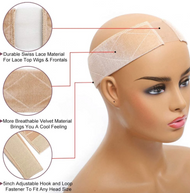
A wig gripper, wig grip band, or wig grip headband sits around your head under the wig and helps create friction so the wig stays put better. This is why people looking for a non-slip wig grip or the best wig band grip are usually trying to solve the same issue. They want the wig to stop shifting.
A wig grip can help when:
- Your wig slips back during the day
- You do not want to use glue or tape
- You want an easier, more glueless setup
- You wear your wig on busy days and want more security
- You want quick on and off wear without a full install
This is especially useful with a lace front wig when you want the front to stay where it should without turning your routine into hard work.
If slipping is your biggest complaint, a grip is usually the better answer than adding more caps underneath.
Wig Grip Cap vs. Separate Layers: When the 2-in-1 Option Makes More Sense
Sometimes the question is not really wig cap vs. wig grip. Sometimes the better question is whether you want to deal with two separate pieces at all.
That is where a wig grip cap can make life easier.
A wig grip cap makes sense when you want:
- a smoother base
- extra hold
- less layering
- a quicker routine
- one easy piece instead of two
For some people, that is the most practical choice. It keeps the setup simple, especially if you wear wigs often and do not want to keep adjusting separate layers every morning.
It is not automatically better than using a cap and grip separately, but it is often a smart middle ground when you want both jobs handled without extra fuss.
Wig Grip vs Wig Cap for Natural Hair, Bare Scalp, Lace Fronts, and Heat
This is where the choice becomes much clearer.
If you still have natural hair
Start with a wig cap. Your main goal is usually flattening and smoothing. That is what a cap does best.
If you have very little or no hair
A wig grip may be the better first buy because you do not need as much help with base control. You may care more about comfort and keeping the wig steady.
If your scalp is sensitive
Go with the softest option that solves the actual problem. Some people prefer a soft cap. Others prefer a grip because it avoids covering the full scalp.
If you wear lace fronts
A grip often works well because it helps with hold without building too much bulk underneath the front. Our wig hairline placement guide is worth reading too, because sometimes what feels like a hold problem is really a placement problem.
If you get hot easily
Try not to over-layer. A heavy setup under the wig can make an already warm day feel worse. In that case, a grip or a wig grip cap can feel lighter than a full layered setup.
If you want the wig to look more natural overall
The base matters, but so does fit, hairline, and how the wig sits on your head. Our guide on how to find a wig that looks natural helps with that bigger picture.
Can You Wear a Wig Cap and a Wig Grip Together?
Yes, absolutely. A lot of people do.
The usual order is:
- wig cap first
- wig grip over the cap
- wig on top
This can work well when you still have a fair bit of hair and also need more hold. It can also help if a wig fits a little loose, but you are not ready to move on from it.
Sometimes wearing both creates:
- extra bulk
- more heat
- a tighter feel
- a less natural front
- more adjusting during the day
So yes, you can wear both. But you should only do it when both problems are actually there.
The Wig Cap and Wig Grip Mistakes That Usually Cause Frustration
Most problems are not because the product is bad. They happen because the setup is wrong.
Common mistakes include:
- picking a cap that feels too tight
- using a grip when the wig size is the real issue
- wearing too many layers under a lace front
- putting the wig too far forward
- assuming every slipping problem needs more hold
- ignoring heat and comfort
This is where our Wig FAQs can save time, because fit questions come up more often than people think. If the wig size is off, no wig headband grip is going to fix everything.
It also helps to build a simple routine around your wig instead of only thinking about accessories. Our wig care guide is helpful for that because a wig that is cleaner and better maintained is usually easier to wear and easier to manage.
How We Usually Recommend Choosing Between a Wig Cap vs. a Wig Grip
If we were helping you narrow it down quickly, this is what we would say.
Choose a wig cap if:
- You still have hair under the wig
- You want a smoother base
- Your main issue is bulk, loose hair, or uneven shape
Choose a wig grip if:
- Your wig moves during the day
- You want a more secure fit
- You want less reliance on glue or tape
- You are looking for a practical wig grip in Australia without overcomplicating things
That is the cleanest way to choose, and in our experience, it is the one that saves the most frustration.
Ready to Choose the Right Base Before You Buy Another Wig?
If your wig feels almost right but not quite there, the answer is often not a new wig. It is the right layer underneath.
You can browse shipping information if timing matters, check our 30-day easy returns if you are unsure which option will suit you best, or simply contact us if you want a more direct recommendation at The Wig Outlet.
Our honest view is simple.
- Buy a cap for the base
- Buy a grip for hold
That is what these pieces are actually for. Once you stop expecting them to do the same job, the choice becomes much easier.