Wigs for Older Women: Lightweight Styles for Daily Wear
21st Oct 2026
Wigs for Older Women: How to Choose a Lightweight, Natural Daily Style
Wigs for older women work best when they feel light, sit securely, and look like a believable version of your own hair rather than a dramatic change. Start with cap fit, then choose a short or medium style, natural density, realistic color, and the fiber you can maintain comfortably.
The Wig Outlet offers everyday, short, pixie, petite, lace-front, monofilament, synthetic, and human-hair options for Australian shoppers.
Quick priorities: lightweight cap, secure fit, soft density, easy care.
Start With Comfort, Then Choose the Cut
The best lightweight wigs for older women are comfortable enough to forget about during the day. Length matters, but cap size, ventilation, pressure around the ears, and overall weight usually affect comfort more than fashion alone.
- Choose a cap that feels secure, not tight.
- Check ear tabs and the nape for pressure.
- Shorter styles usually reduce heat and tangling.
- Open wefting can improve airflow.
- Petite sizing may help if an average cap bunches or slips.
For smaller head sizes, compare the petite wig range instead of tightening an oversized average cap.
Short and Pixie Wigs Are Often Easier for Daily Wear
Short wigs for older women are popular because they need less brushing, create less neck friction, and usually hold a neat shape through a full day. Pixies, short shags, and soft bobs also keep the face visible without heavy lengths around the shoulders.
Style |
Daily advantage |
Best for |
|
Pixie |
Light, quick to finger-style |
Minimal morning maintenance |
|
Short shag |
Soft movement and forgiving layers |
Added volume without bulk |
|
Bob |
Familiar shape with more face framing |
Women who prefer a classic cut |
|
Medium layered |
More styling flexibility |
Buyers not ready for very short hair |
Browse short wigs or the pixie wig collection. Current options show the trade-off: lighter short constructions prioritize easy wear, while ANNETTE adds SmartLace and monofilament detail.
Natural Density Matters More Than Extra Volume
A natural-looking wig should not automatically look fuller than the hair you would normally wear. Natural-looking wigs for older women often benefit from softer density, controlled crown volume, and layers that move instead of sitting like a solid helmet.
Too much hair can make a short wig look obvious. Look for a silhouette that frames the face without creating unnecessary height. Styles such as layered pixies and light shags can add shape while keeping the finished result believable.
Lace Front, Monofilament, or Traditional Cap?
Cap construction changes both realism and comfort. A lace front softens the front hairline, while a monofilament top can create the appearance of hair growing from the scalp and allows more natural-looking parting.
Cap feature |
Main benefit |
Consider it when |
|
Traditional/open cap |
Light, simple, often easier care |
Comfort and value come first |
|
Lace front |
More natural front hairline |
You wear hair away from the face |
|
Monofilament |
Scalp-like parting |
The top and part need extra realism |
|
Hand-tied |
Flexible movement and soft construction |
Daily comfort justifies a premium cap |
The Wig Outlet currently carries dedicated lace-front wigs and monofilament wigs across several lengths and fibers.
Wigs for Older Women With Thinning Hair Need the Right Fit
For wigs for older women with thinning hair, a secure cap does not need to feel tight. A lighter construction, correct circumference, adjustable straps, and a smooth fit at the crown can reduce constant repositioning during daily wear.
If an average cap gathers at the crown or nape, sizing may be the real problem. The Wig Outlet organizes products by cap design, including petite, average, large, lace-front, monofilament, and hand-tied options.
Female pattern hair loss can become more noticeable with age. A wig can provide cosmetic coverage, but sudden or unexplained hair loss deserves medical assessment through a health professional or Healthdirect Australia.
Synthetic or Human Hair for Everyday Wear?
Both fibers can work well. Human hair wigs for older women provide natural movement and styling flexibility, while synthetic wigs usually hold their original shape with less daily work. Your routine should decide, not the assumption that one fiber is always better.
- Synthetic: easier shape retention, lighter daily styling, broad price range.
- Human hair: more restyling freedom and natural movement, but more care.
- Human-hair blend: combines characteristics of both fibers on selected products.
For shorter premium options, compare short human-hair wigs. For easy everyday styles, browse the broader everyday-wear collection.
Choose Color That Looks Like You, Not Your Age
There is no rule that older women must wear gray hair. Quality wigs for older women look most convincing when the shade works with skin tone, eyebrows, remaining hair, and personal style.
Salt-and-pepper, soft gray, ash blonde, warm brunette, rooted colors, and dimensional highlights can all work. Judge the shade beside your skin and eyebrows instead of choosing by age.
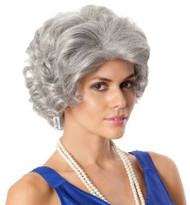
If gray is your preference, compare the grey wig collection by undertone and amount of visible gray rather than choosing by age alone.
Match the Cap Size Before Adjusting the Straps
A lightweight wig can still feel uncomfortable if the cap is wrong. The Wig Outlet's petite range is designed around smaller sizing, while many average-cap styles fit a larger circumference. Adjustable straps fine-tune fit, but they should not compensate for a clearly oversized cap.
Check:
- Head circumference.
- Crown and nape bunching.
- Ear-tab position.
- Pressure after 20 to 30 minutes.
- Movement when turning your head.
A correct fit usually improves both security and the way the hairline sits.
Keep the Daily Routine Simple
The easiest wigs for older women are the ones that fit real life. A style needing constant heat, brushing, or adhesive may look beautiful but become frustrating if you want quick morning wear.
A practical daily routine is simple:
- Align the ear tabs.
- Adjust the cap until secure, not tight.
- Finger-style as the fiber allows.
- Remove gently after wear.
- Store without crushing the cap.
Use the site's wig-care guidance and wig accessories for fiber-appropriate tools and storage.
How to Choose the Right Wig in Australia
Start with your routine, not a product photo. For daily wear, prioritize correct size, manageable length, realistic density, a flattering color, and construction that gives you the level of realism you actually need.
At The Wig Outlet, Australian shoppers can compare everyday styles, short and pixie cuts, petite sizing, lace fronts, monofilament caps, synthetic options, and human-hair wigs. If two styles seem close, choose the one you can put on, maintain, and wear comfortably without changing your normal day around the wig.
Frequently Asked Questions
Are Short Wigs Better for Older Women?
Short wigs are often easier for daily wear because they weigh less, tangle less, and need less styling. The best length still depends on your preferred look and routine.
What Wigs Look Most Natural on Older Women?
Natural results usually come from correct cap fit, believable density, suitable color, and a hairline or part that matches the style. Lace-front and monofilament designs can add realism.
Are Human Hair Wigs Good for Older Women?
Yes. Real hair wigs for older women offer natural movement and styling flexibility, but they need more maintenance. Synthetic wigs can be easier when simple daily care matters more.
What Is Best for Older Women With Thinning Hair?
Choose a correctly sized, lightweight cap with soft density and secure adjustment. Monofilament or lace-front construction can improve realism, while shorter styles often reduce heat and maintenance.
Are Pixie Wigs Suitable for Older Women?
Yes. Pixie wigs for older women can be lightweight, easy to style, and flattering without requiring a severe or dated look. Choose the cut for your face and personal style.